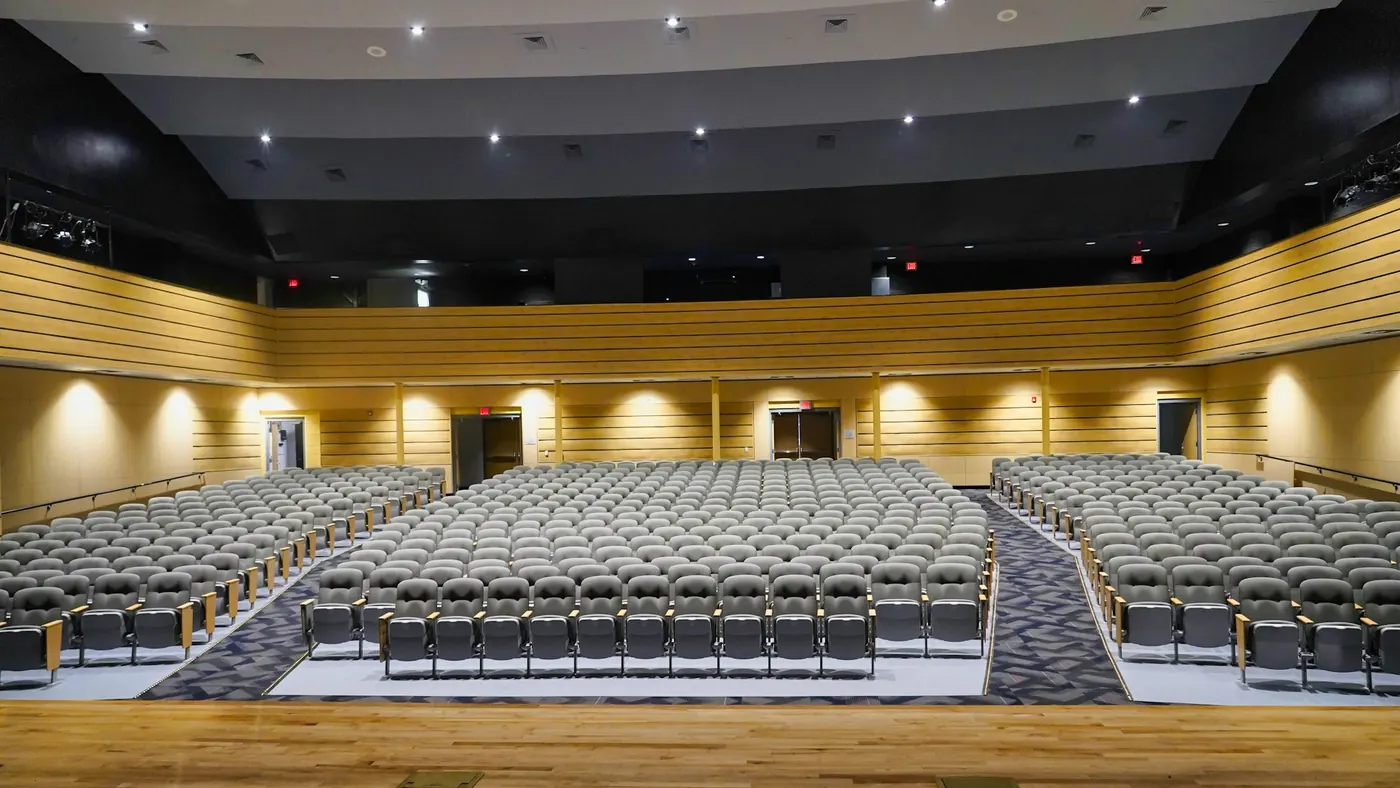
In an auditorium the problem is rarely volume: it’s that the sound arrives with echo, feeds back or doesn’t reach the back rows. A good system is designed for the room and how it’s used, not bought by wattage.
The parts of a sound system
- Microphones: handheld, lavalier or podium, wired or wireless.
- Mixer: brings all the sources together and sets the volume and tone of each one.
- Processor or equalizer: adapts the sound to the room and helps prevent feedback.
- Amplifiers with enough power, plus some headroom, for the speakers.
- Main speakers for the audience and monitors so speakers and musicians can hear themselves.
- Audio sources: the presentation laptop, music or video.
Where to place the speakers
Placement matters more than power. These rules prevent most problems:
- In front of and beside the stage, aimed at the audience and above head height.
- Never behind the microphones: if a mic picks up a speaker, you get feedback, that high-pitched squeal that stops everything.
- Fill speakers in long rooms: speakers halfway down the room, with a small delay so their sound arrives at the same time as the sound from the stage.
- Column speakers in rooms with a lot of echo: they aim the sound at the audience and send less of it to the ceiling and walls.
Acoustics: echo can be treated too
Glass, tile and concrete reflect sound, which is why an empty hall echoes. Turning up the volume makes it worse. What works is absorbing some of those reflections with heavy curtains, acoustic panels, carpets or upholstered seats.
A simple test: clap once in the middle of the room. If the sound takes a while to fade, the room needs acoustic treatment before it needs more speakers.
Microphones: wired or wireless
| Type | Advantages | Best for |
|---|---|---|
| Wired | Reliable, no batteries or interference | Podium, head table, musicians |
| Wireless handheld | Freedom to move and to pass it to the audience | Hosts, audience questions |
| Wireless lavalier or headset | Hands-free with steady volume | Talks, classes, theater |
With wireless mics, always keep spare batteries and test every microphone before the event.
How we design a system
- Site visit and measurements: size, height, materials and audience size.
- Use: a conference room is not the same as a hall with live music or video.
- Design: speaker type and placement, power with headroom and number of microphones.
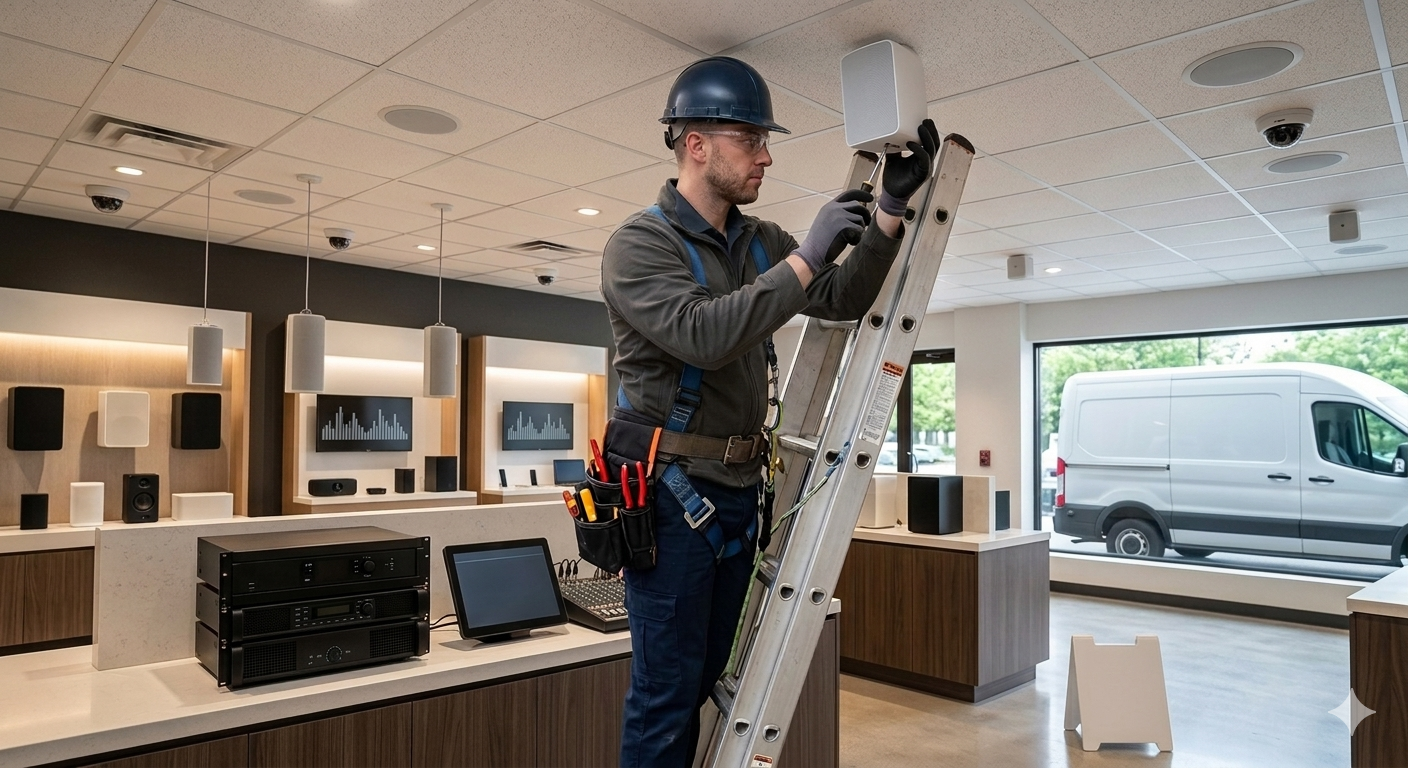
- Installation with tidy, concealed cabling.
- On-site tuning: we equalize the room and test every microphone on stage.
- Training for the staff who will run the system.
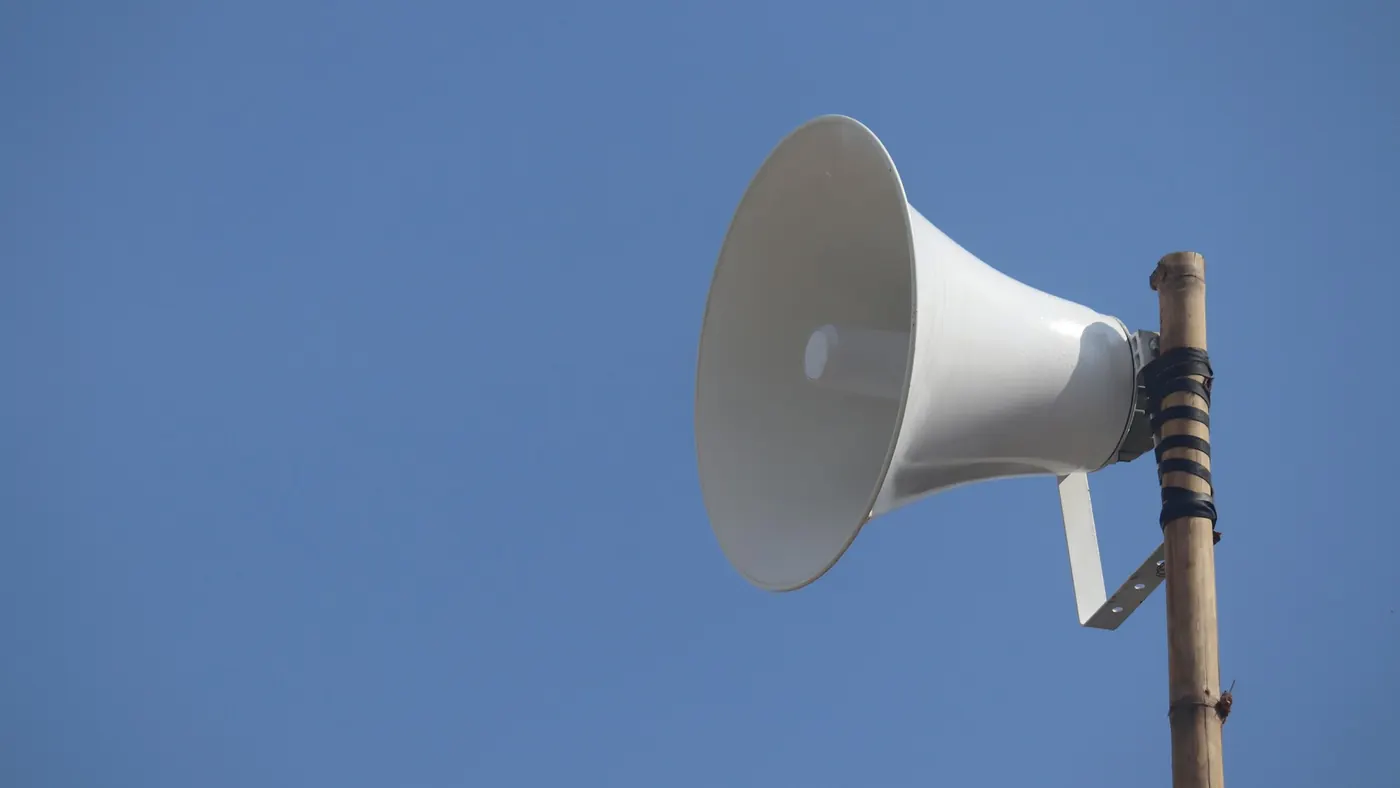
At José Ramón Bejarano School, for example, we installed a 250 W amplifier with distributed speakers so the sound covered the whole campus.
Do you have an auditorium or hall where people can’t hear well?
We reply within 24 hours, and advice is free.